

4. TO THE UNIVERSITY’S EMPLOYEES
The University’s Human Capital – Growth and Innovation Attitude Indicators – Stability Indicators
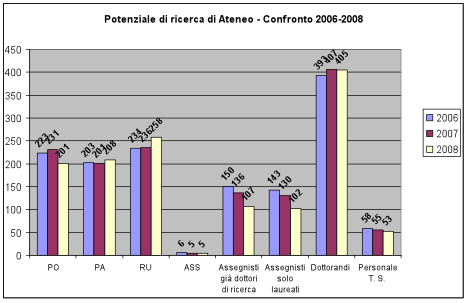
The Human Capital consists of all University’s human resources’ abilities, skills and know-how. The Human Capital indicators that have been considered concern the University’s research staff only: professors, temporary research assistants, doctoral candidates, research technical staff (ex. employees working in laboratories). Within this framework, the growth and innovation attitude indicators assess both the employees’ willingness to improve their skills and the University’s readiness to support them with the necessary resources.
Intangibles
The Human Capital stability indicators measure employees’ fidelization and their sense of belonging to the University. The tables below show the trends in hiring and terminations of working relationships for research employees as well as the University’s ability to steady its temporary employees.
|
Human Capital – Hiring and Terminations Intangibles |
|||||
|
Technical and Scientific Staff (*) |
|||||
|
|
Hiring |
Terminations |
|||
|
|
D |
EP |
D |
EP |
|
|
2006 |
1 1 |
0 |
0 |
2 2 |
|
|
2007 |
0 |
0 |
2 3 |
1 |
|
|
2008 |
1 |
0 |
3 4 |
2 5 |
|
|
Total |
2 |
0 |
5 |
5 |
|
|
1 Successful candidate in a Unife open competition |
|||||
|
2 Task changing |
|||||
|
3 Retirements |
|||||
|
4 of which 2 retirements and 1 become a University Researcher |
|||||
|
5 of which 1 retirement |
|||||
|
Professors |
|||||
|
Full Professors |
|||||
|
|
Hiring |
Terminations |
|||
|
|
U |
D |
U |
D |
|
|
2006 |
1 |
0 |
6 |
1 |
|
|
2007 |
1 |
0 |
4 |
4 |
|
|
2008 |
4 |
0 |
11 |
2 |
|
|
Total |
6 |
0 |
21 |
7 |
|
|
Associate Professors |
|||||
|
|
Hiring |
Terminations |
|||
|
|
U |
D |
U |
D |
|
|
2006 |
3 |
5 |
8 |
5 |
|
|
2007 |
1 |
1 |
5 |
1 |
|
|
2008 |
2 |
0 |
10 |
2 |
|
|
Totae |
6 |
6 |
23 |
8 |
|
|
Researchers |
|||||
|
|
Hiring |
Terminations |
|||
|
|
U |
D |
U |
D |
|
|
2006 |
5 |
6 |
4 |
4 |
|
|
2007 |
5 |
6 |
3 |
2 |
|
|
2008 |
22 |
13 |
2 |
6 |
|
|
Total |
32 |
25 |
9 |
12 |
|
|
University Assistants |
|||||
|
|
Terminations |
||||
|
|
U |
D |
|||
|
2006 |
0 |
1 |
|||
|
2007 |
0 |
1 |
|||
|
2008 |
0 |
0 |
|||
|
Total |
0 |
2 |
|||
(* “D” and “EP” are two professional categories of the Universiy technical and
scientific staff involved in the research activity)
Human Capital – Number of Temporary Research Assistants become Full Researchers PIntangibles |
||||||||||
|
|
2004 |
2005 |
2006 |
2007 |
2008 |
|||||
|
Department |
M |
W |
M |
W |
M |
W |
M |
W |
M |
W |
|
Architecture |
|
|
|
|
|
|
1 |
|
|
|
|
Biochemistry and Molecular Biology |
|
|
|
|
1 |
|
|
|
|
|
|
Biology and Evolution |
|
|
|
1 |
|
1 |
|
1 |
|
|
|
Chemistry |
|
|
|
|
|
|
|
2 |
|
|
|
Medical – Surgical Sciences |
|
|
|
|
|
|
|
|
1 |
|
|
Territorial Economics and Institutions |
2 |
|
|
1 |
|
|
|
|
|
|
|
Physics |
|
|
|
|
|
|
1 |
|
2 |
1 |
|
Engineering |
2 |
|
1 |
|
|
1 |
|
1 |
2 |
|
|
Mathematics |
|
|
|
|
|
|
|
|
|
1 |
|
Clinical and Experimental Medicine |
|
|
|
1 |
1 |
|
|
|
|
|
|
Experimental and Diagnostic Medicine |
|
|
|
|
|
|
|
|
1 |
1 |
|
Morphology and Embryology |
|
|
|
|
|
1 |
|
|
|
|
|
Natural Resources |
|
|
|
|
|
|
|
|
1 |
|
|
Biomedical and Advances Therapeutic Sciences |
|
1 |
|
|
|
|
|
|
2 |
|
|
Earth Sciences |
1 |
|
|
|
|
|
|
|
|
|
|
Pharmaceutical Sciences |
|
|
|
|
|
|
|
|
|
1 |
|
Law |
1 |
2 |
|
|
1 |
|
1 |
1 |
4 |
2 |
|
Human Sciences |
1 |
|
|
|
|
|
|
|
|
|
|
Temporary Research Assistants now Full Researchers - total |
7 |
3 |
1 |
3 |
3 |
3 |
3 |
5 |
13 |
6 |
|
Researchers – Total |
159 |
106 |
141 |
102 |
132 |
102 |
132 |
104 |
148 |
110 |
|
% of Temporary Research Assistants now Full Researchers at the University of Ferrara |
4,40 |
2,83 |
0,70 |
2,94 |
2,27 |
2,94 |
2,27 |
4,80 |
8,8 |
5,5 |
The University Human Capital is described in detail in paragraph 3.2 of the Social Report.
The Project “Public, therefore Efficient”
The Project “Public, therefore Efficient” (“Efficienti perchè Pubblici – Ex’P”) started in 2005 as part of the University’s larger process for the definition of the strategic goals for the three-year period 2007-2009. The project aimed at making the University’s administration more efficient, as already done for teaching and research activities. The core of the project was about the University human resources management, but other areas were concerned, such as economic resources, communication, IT systems, logistics and the building of new facilities.
With regards to human resources, the project phases were the following:
- Human resources’ reorganization on a process base (October 2005 – January 2006);
- Analysis of the University internal organization, in order to revise the incentive policy (June – December 2006);
- Definition of the professional profiles, to use them as a human resources management tool. (January – July 2007).
The analysis of professional profiles for the administrative staff was completed in 2008. The assessment has been carried out completely online thanks to the support of an IT company.
As technical profiles, the mapping of their professional profile also started in 2008 and led to the definition of 13 main categories, which constitute the base for their management.
University’s Technical Profiles Mapping |
|
|
Profiles’ categories |
Description of tasks |
|
Technician Coordinator |
Coordinates other technicians within the Centre or the Department. |
|
Technician expert for the support to research and teaching |
Directly manages the equipment in laboratories or carries out highly specialized support activities for teaching and research |
|
Technician for the support to research and teaching |
Directly manages the equipment in laboratories or carries out highly specialized support activities for teaching and research |
|
Employee for the support to research and teaching |
Makes use and/or manages the supply of laboratories materials and equipment or carries out activities in support of research and teaching. |
|
Expert technician for the management of complex equipment |
Directly manages the functioning of complex equipment in their support for research activities. |
|
Technician for the management of crucial equipment |
Manages the functioning of complex equipment in their support for research activities. |
|
Employee for the management of complex equipment |
Carries out specific tasks with complex equipment within specific research projects. |
|
Technician expert for the support to medical research and assistance |
Carries out research activities that require highly specialization in medicine and has direct contact with patients. |
|
Technician for the support to medical research and assistance |
Carries out technical activities in support of research programs in the medical field and has direct contact with patients. |
|
Employee for the support to medical research and assistance |
Makes use of technical - medical equipment for research activities and has direct contact with patients. |
|
Employee for support activities |
Carries out various tasks in support of the technical activities of the Department o Section. |
|
Botanical plot guardian |
Coordinates other technicians within the botanical plot and carries out tasks requiring high specialization. |
|
Technician for the botanical plot |
Carries out specific tasks and makes use of the equipment in the botanical plot for research and teaching purposes. |
Another important result of the mapping of competences was the reconsidering of the University’s organizational model of the Departments. The project, in fact, showed weak hierarchical relations in the coordination of the technical and administrative staff.
At the beginning of 2009, an experimental skills-based assessment for Departments’ technicians was launched.
On the base of the analysis aiming at redefining the University’s incentives policy, a new system based on meritocratic criteria was approved by the Departments Committee. The system concerns the technical staff employed at Departments and Centre and being included in the ‘D category’ of the National Labour Agreement.
Thus, three performance indicators were chosen and to each of them a percentage specific weight was assigned:
- Carrying out of tasks correctly (without revisions, modifications or corrections);
- Carrying out of tasks within the prescribed time;
- Ability to adapt (working times and operational modalities) according to the working team’s needs.
The second part of the assessment concerned those employees distinguishing for excellent performances on the workplace. In order to be included in the 10 best performers list, employees had to have a positive score for at least one of the indicators concerning their work performance. For every category of technicians, some indicators were selected and each of them a percentage specific weight assigned, as shown in the table below.
|
Indicators for the assessment of technicians |
||||
|
Category |
Technician expert for the support to research and teaching |
Technician expert for the support to medical research and assistance |
Technician for the management of complex equipment |
|
|
Assessment criteria |
Publications |
|||
|
Thesis |
||||
|
Patents/Spin Off |
Patents/Spin Off o Teaching in CDS |
10% increase in operations with respect to the previous year |
||
The Project “Public, therefore Efficient” is described in detail in paragraph 11.1 of the Social Report.
The Staff Training
Staff training and updating are among the core actions the University takes to support its employees’ professional growth. Besides basic, cross-discipline and specialising training courses, the University has a Training Service (“Servizio Formazione”) conceived to monitor training quality as well as the analysis of the technical and administrative staff training needs.
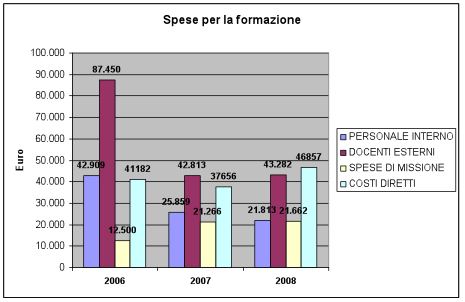
In 2008, the University of Ferrara spent 113.944 Euros for the training of its employees (10,7% more than in 2007): 21.813 Euros for the internal staff, 43.282 Euros for external professors, 21.662 Euros for travel allowances and 46.857 Euros as direct costs.
|
Staff training |
||||||
|
|
Number of training hours |
Number of participants |
||||
|
Type of Courses |
2006 |
2007 |
2008 |
2006 |
2007 |
2008 |
|
Updating courses |
11.335 |
10.288 |
10.316 |
807 |
615 |
1.837 |
|
Managerial training |
1.630 |
1.480 |
358 |
214 |
138 |
20 |
|
TOTAL |
12.965 |
11.768 |
10.674 |
1.021 |
753 |
1.950 |
A detailed description of the University’s staff training activities can be found in paragraph 11.3 of the Social Report.
The University’s action to safeguard students and employees’ health and safety
The University’s Health Safety and Environment Office (“Ufficio Sicurezza Salute Ambiente”) is responsible for all aspects related to employees and students’ health and safety, as well as to environmental protection. The HSE Office was established in 2008 in replacement of the former Centre for Health, Safety and Environmental Protection (“Centro Servizi Igiene, Sicurezza e Tutela Ambientale – SISTA”). The office is responsible for:
- employees’ health and safety, according to the Legislative Decree n. 81/2008;
- environmental protection, with particular focus on waste management and coordination and monitoring of biological, chemical and radioactive materials’ transfers to the University’s laboratories and research centres.
As far as safety is concerned, the HSE Office is in charge of all actions contained in the Legislative Decree n. 81/2008 (‘Consolidated Act for Safety in the Work Environment’)[1]. The HSE Office’s tasks are those assigned by the law to the following professional profiles: delegated employer, prevention and protection manager, company doctor, employees’ representative for safety.
With regards to staff training, in 2008 two training courses were held, aimed at improving knowledge of workplace safety laws. Participants were 93, for a total of 308 training hours.
|
Safety training |
|||
|
|
2006 |
2007 |
2008 |
|
Number of courses |
5 |
3 |
3 |
|
Number of participants |
46 |
30 |
93 |
|
of which men |
21 |
15 |
38 |
|
of which women |
25 |
15 |
55 |
|
Total number of training hours |
328 |
300 |
308 |
The table below shows data on students’ injuries at the University for the year 2008, as compared to data referring to the previous years. The number of injuries occurred to students at the Faculty of Medicine is higher than that registered in other Faculties of the University. The main reasons behind it are two: the higher number of students in the Faculty of Medicine and the massive use of medical and chirurgical devices for diagnostic and invasive treatments on patients. Clinical training programs imply, in fact, students’ contact with patients in dedicated medical facilities, where prevention procedures are the same designed for the medical and nursing staff.
|
Number of students’ injuries* |
|||
|
Students |
2006 |
2007 |
2008 |
|
Architecture |
1 |
0 |
1 |
|
Engineering |
0 |
0 |
2 |
|
Mathematics, Physics and Natural Sciences |
0 |
1 |
1 |
|
Law and Economics |
2 |
2 |
3 |
|
Medicine and Surgery |
10 |
5 |
26 |
|
Letters and Philosophy |
2 |
3 |
3 |
|
Pharmacy |
0 |
0 |
0 |
|
Total number of students |
15 |
11 |
36 |
|
Postgraduate students |
2006 |
2007 |
2008 |
|
Specializing students |
3 |
4 |
0 |
|
Doctoral candidates |
3 |
0 |
1 |
|
Master students |
0 |
1 |
0 |
|
Total number of postgraduate students |
6 |
5 |
1 |
|
TOTAL |
21 |
16 |
37 |
(*Only those injuries requiring a 3 day prognosis, and for which a compulsory communication must be reported to INAIL).
The data on injuries should be analysed taking into account the external setting and the complexity of tasks performed. Therefore, taking into consideration the dangerous nature of facilities and devices for research and scientific experimentation, the data on injuries can be considered as negligible.
[1] Legislative Decree 9 April 2008, n. 81, Implementation of art. 1 of the Law 3 August 2007, n. 123, for health and safety in work environments. The Legislative Decree 81/2008 (“Consolidated Act on Safety”, issued on the Official Journal n. 101 of the 30th April 2008) has replaced and abrogated the Legislative Decree n. 626/1994.
